Peptify
Epithalon 50mg
Epithalon 50mg
Couldn't load pickup availability
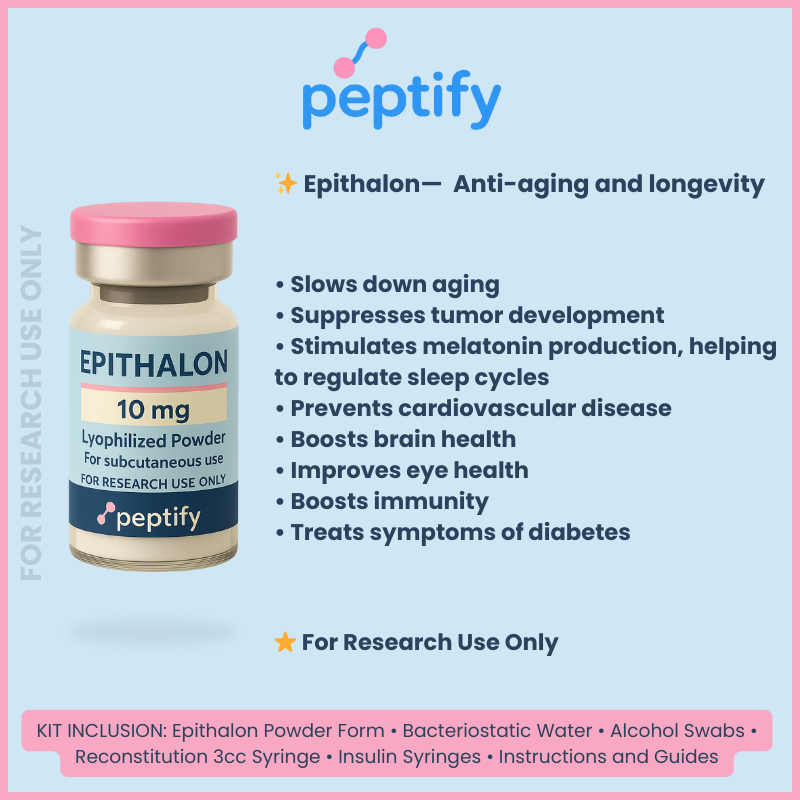
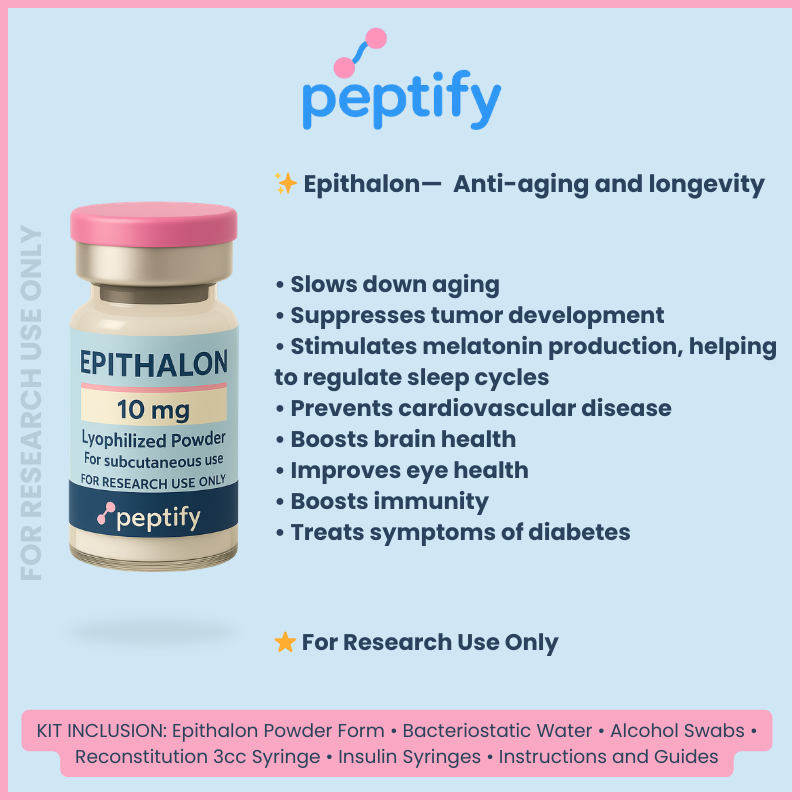
✨ Epithalon — Longevity & Cellular Renewal Peptide
What Is Epithalon?
Epithalon is a synthetic tetrapeptide (Ala-Glu-Asp-Gly) originally studied for its role in cellular aging, circadian rhythm regulation, and longevity research. It has been explored for decades in aging science for its potential to support telomere maintenance, healthy melatonin rhythms, and antioxidant defense systems in aging cells.
Often referred to as a “longevity peptide,” Epithalon is commonly included in short-term, cyclic research protocols focused on cellular renewal and age-related biological pathways.
🌿 What Epithalon May Support
✔ Telomere health & cellular longevity pathways
✔ Circadian rhythm & nighttime melatonin balance
✔ Sleep quality & biological clock regulation
✔ Antioxidant defense systems
✔ Healthy aging & cellular resilience
✔ Long-term wellness research models
🔬 How Epithalon Works
Epithalon has been studied for its ability to influence telomerase activity, the enzyme associated with maintaining telomeres — the protective caps at the ends of chromosomes that shorten with age.
It has also been researched for its effects on the pineal gland, where it may help restore youthful melatonin signaling and support balanced circadian rhythms. Together, these mechanisms make Epithalon a unique peptide in longevity and aging research.
⭐ Why Researchers Use Epithalon
Epithalon stands out because it is typically used in short, intentional cycles, rather than continuous use. Research has explored its potential for:
• Supporting long-term cellular function
• Enhancing antioxidant enzyme activity
• Promoting healthy sleep-wake signaling
• Supporting age-related biological systems
Its cyclic use model makes it a popular peptide in advanced longevity and anti-aging research.
🧬 Key Features
• Synthetic tetrapeptide (Ala-Glu-Asp-Gly)
• Studied in aging & longevity research for over 20 years
• Associated with telomere & circadian rhythm pathways
• Typically explored in short-term research cycles
⭐ For Research Use Only